

Limited to 11 Travelers
An In-Depth Nature Odyssey in Search of Bengal Tigers & Other Rare Wildlife
The Indian subcontinent is one of the world's most stimulating destinations. While its melange of cultures has long drawn the attention of historians and travelers, its wild habitats offer rare treasures for those who are passionate about nature. This comprehensive safari gets you far away from India's intense cities and into its natural realm, a landscape of powerful rivers, fabled jungles and intriguing wildlife. This is the native territory of the Bengal tiger, whose numbers are on the rise after a century of decline. Conservation travel is integral to protecting wildlife in India, and our presence directly benefits the continued existence of tigers and other precious endangered species, like the one-horned rhinoceros, which we go in search of on daily 4x4 wildlife drives. Join us for the grandest Indian wildlife safari we know of!

This trip will be hosted by a SDZWA Wildlife and Conservation Expert
The host for this trip will be an SDZWA expert on wildlife specific to the region. They will be with you every step of the way, to educate and inspire you, and to share their passion for nature! Check back for more details.


Trip Highlights
Explore three of India’s top national parks on multiple safari drives in open 4x4s—you won’t find a richer or more varied itinerary focused on wildlife
Join our naturalist Expedition Leaders in search of tigers, one-horned rhinos, Asian elephants, sloth bears, barking deer, Indian wild dogs, elegant peacocks and more
Relax in well-apointed comfort at premier ecolodges tucked within India’s best wildlife reserves, and avoid the crowds by choosing less-visited destinations
Why Choose Us for Your India Nature Adventure?
India is one of the world’s most captivating travel destinations. But choosing a trip can be overwhelming if you’re looking to maximize your time in nature, up your odds of seeing tigers, avoid crowds wherever possible, and travel with a superlative guide. That’s why we’ve designed the ideal India odyssey for nature lovers. Our Grand India trip is a comprehensive adventure that is simply the best way to experience India's outstanding wildlife. Here’s why:
- An All-Encompassing Wildlife Itinerary...in Less-Traveled Parks
This is the ultimate India experience for nature lovers. Boost your chances of seeing Bengal tigers—plus a host of other Indian wildlife—on visits to three different national parks that are home to some of India's most concentrated tiger populations. Most travelers go to Ranthambore National Park at peak season, which is heavily advertised and very crowded. We visit equally appealing Bandhavgarh National Park instead, plus Kanha and Dudhwa, which are more remote with fewer tourists and feature excellent chances to see Asian elephant and one-horned rhinoceros. - India’s Finest Naturalist Guides
Our India Expedition Leaders average more than 15 years' experience. You won’t find more knowledgeable, personable or enthusiastic guides. Our philosophy is simple: a nature adventure is only as good as the hosts and guides who lead it, so we provide the very best! - A Small Group Means More Authentic Nature Experiences
Most visitors to India travel in large groups aboard tour buses, focusing on cities and crowded cultural monuments. But that’s no way to experience India’s rich nature, which is our focus. We take just 11 guests, for a lower impact in nature reserves and more personal encounters with wildlife and local people. - Nine Days of Wildlife-Focused Activities in Varied Habitats
Spend three days each in three premier wildlife reserves as we explore contrasting Asian habitats: the dry mixed deciduous forests of central India and the moist floodplains and grasslands of the Brahmaputra basin. Daily morning and afternoon safari outings provide a variety of perspectives. - Distinctive Accommodations Enhance Your Safari
When you travel with us to India, our accommodations ensure your every comfort. Environmentally sensitive ecolodges, while secluded, offer exceptional amenities. Each is selected for proximity to wildlife and the high quality of the guest experience. India’s luxury urban hotels are renowned worldwide, and the 5-star hospitality of the landmark Taj Mahal Hotel in Delhi and the Westin Kolkata Rajarhat offer welcome indulgences before and between our safari adventures. - Our Presence Directly Helps to Protect Tigers
After years of precipitously declining tiger numbers, India is charting steady increases. Its 2018 quadrennial tiger census counted 2,967 tigers, a 33% rise over the 2014 census, which was also up 30% from 2010. Conservation groups attribute a share of the increase to responsible ecotourism. The economic value of visitors to India's tiger reserves benefits local communities, offering people an incentive to protect the wildlife they share the land with. Given that India is home to 70% of the world's remaining wild tigers, our presence here for wildlife tourism here is integral to that continued success.
Itinerary

Day 1–13: Look for rare Bengal tigers, one-horned rhinos and other endangered animals as we discover India's wild side on an exploration of three premier national parks.
Accommodations

Taj Mahal Hotel
New Delhi, India
One of the most distinguished addresses in the national capital, the 5-star Taj Mahal Hotel is a city landmark, located in the exclusive residential area of Lutyens’ Delhi close to the seat of government and foreign embassies. The hotel’s elegant interiors reflect the heritage of Mughal Delhi, with intricate motifs, golden inlay work, marble fountains, original art and a veritable showcase of historic artifacts. Exuding refined ambience, the hotel's 294 spacious guestrooms enjoy views over the city or pool and gardens through panoramic windows. Each room is appointed with every amenity befitting a property of this caliber. The health and fitness center features steam baths, sauna, Jacuzzi and traditional Indian Ayurvedic massage and Sirodhara treatments. A suite of restaurants offers a wide range of cuisines and beverages, and classic afternoon tea is served each day in the Machan and Emperor Lounge.

Kings Lodge
Bandhavgarh National Park, India
Kings Lodge is nestled among sal-forested hills in a large natural wooded estate just minutes from the Tala gate of of Bandhavgarh National Park. Surrounded by wild country, this elegant ecolodge enjoys an exceptional location near some of India's most diverse and abundant wildlife. The lodge exhibits a concern for conservation and local communities in every aspect of its design and operations. Utilizing stone, tile, stucco and wood, it is built to blend with its environment using a rural vernacular style of architecture and ecologically friendly construction methods, including eco-sensitive waste disposal systems.
Accommodations are in 10 cottage rooms and 8 stilt cottages, built with nature and solitude in mind. All have air conditioning, 24-hour electricity, modern en suite bathrooms, and a large private veranda with views of the forest. Wi-Fi is able in the public areas. The dining room serves varied cuisines in a warm and romantic setting, with a fireplace and views of the expansive wild grasslands backdropped by sal-forested hills. An outdoor barbecue and bush dinner area provide opportunities for outdoor dining. In between morning and late-afternoon game drives, enjoy the swimming pool and sundeck, indulge in an Indian massage at the spa, peruse a book in the small natural history library, or climb up into the watch tower to survey the surrounding landscape and search for wildlife.

Singinawa Jungle Lodge
Kanha National Park, India
Singinawa Jungle Lodge offers all the comforts of a world-class resort within the wild environs of India's tiger heartland. The lodge name reflects its practice of the Sherpa philosophy of singinawa—protection of the sacred forest—while working closely with the local communities on conservation. The lodge is situated within 55 acres of undisturbed jungle punctuated with open grasslands and striking rock outcrops. The Tannaur River provides year-round fresh water. Accommodations are in 12 charming stone and slate cottages decorated in crisp white hues accented by traditional, colorful sari fabric designs, bright rugs and intricate carved wood furniture. All feature a large bedroom, en suite facilities with double vanity and rain shower, air conditioning, fireplace, mini bar and private veranda, offering secluded environs for relaxing. A large free-form swimming pool offers refreshment between wildlife drives, and the estate also houses the Kanha Museum of Life and Art, a museum of tribal art that showcases the indigenous Gond and Baiga artisans and their labors of love.
Taj Mahal Lucknow
Lucknow, India
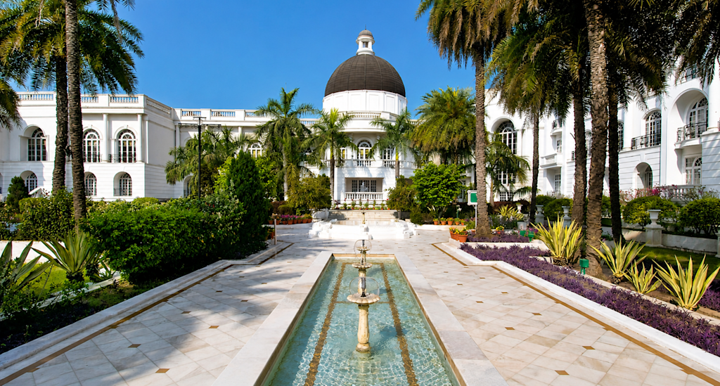
Set on 25 acres overlooking the Gomti River, this stately hotel reflects the city's Nawabi heritage through its crisp white facade, sweeping central dome and arcaded verandas. A marble promenade and narrow reflecting fountain lead through formal gardens planted with towering palms, flowering shrubs and broad lawns before arriving at the hotel's striking rotunda. Beneath the dome, polished marble floors inlaid with geometric star motifs, fluted white columns and a crystal chandelier create a grand yet understated welcome, while carved jaali screens and warm wood accents carry the design into the adjoining lounges and restaurants.
Spacious guest rooms balance contemporary comfort while showcasing local craftsmanship. Oversized murals inspired by Lucknow's celebrated textiles add texture behind crisp white bedding, while cream walls, dark wood furnishings and arched windows create bright, uncluttered spaces. Each room includes a writing desk, upholstered seating area, tea and coffee station, minibar, electronic safe, flat screen TV and complimentary Wi-Fi. Marble bathrooms feature glass-enclosed rain showers, illuminated mirrors and luxury bath amenities.
Dining ranges from a casual cafe to a high-end restaurant, where the region's celebrated slow-cooking traditions take center stage. A cocktail bar provides a relaxed setting for drinks and light bites. A freeform outdoor pool edged in white marble sits among palms and landscaped gardens, with teak loungers and shade umbrellas. Additional amenities include the J Wellness Circle spa, salon and a wood-paneled fitness center overlooking the grounds. The hotel’s sustainability initiatives include water conservation, energy efficiency, responsible sourcing, waste reduction and community engagement.
Jaagir Manor
Dudhwa National Park, India
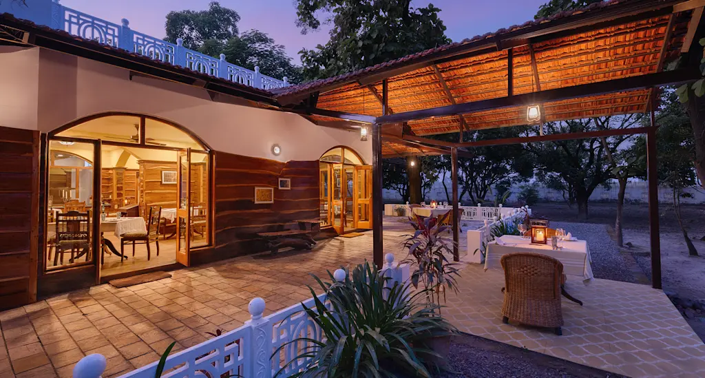
At the edge of Dudhwa National Park, this restored 80-year-old hunting lodge channels the romance of India’s old jungle estates without feeling staged or precious. Exposed brick walls, scalloped arches, hand-painted murals and long stone corridors open onto dense greenery filled with banyan, neem and towering palms. The heritage buildings feel cool and expansive, with soaring ceilings, colorful woven rugs, cane settees and softly worn antiques that give the manor an easy, lived-in character. Just beyond the grounds lies one of India’s richest wildlife regions, where tiger territory, elephant corridors and tall grasslands stretch across the Terai landscape.
Guest rooms balance period details with polished comfort. Ornate wallpaper, carved wood furnishings and hand-painted cabinets sit alongside crisp king beds dressed in layered linens and richly textured fabrics. Tall windows pull in garden light while oversized layouts create space to lounge after safari drives. Bathrooms are spacious and refined with walk-in showers, premium bath amenities and generous vanities. Rooms also include air conditioning, Wi-Fi, minibar, safe, bathrobes, coffee and tea facilities and a writing desk. Select accommodations are located within the heritage wing while elevated villas immerse guests deeper into the surrounding forest canopy. An outdoor pool, shaded courtyards and garden pathways create inviting spaces to gather between wildlife excursions.
Know Before You Go
Whether you're preparing for your upcoming India safari or just want to learn more about this vibrant country, we've got you covered.

Frequently Asked Questions
Discover our most frequently asked questions about India wildlife, lodging and more.

Trip Pricing
Trip Price: $13,895 (+internal air).
Internal Air Cost: $1,233 per person (this will be listed separately on our invoicing).
Single Occupancy: For a single room, add $2,495. Contact us to learn how you can avoid the single supplement.
Deposit: $1,500 per person (non-refundable)
Group Size
Limited to 11 Travelers
A very important feature of our India wildlife safari is the limited group size, as nature encounters are best experienced away from crowds within the intimate setting of a small group.
Included
Trip price includes: Accommodations, services of SDZWA Host and Nat Hab's Expedition Leader(s), local guides, lodge and park staff, all meals from dinner on Day 1 through lunch on final day, most gratuities, still camera fees, airport transfers on Day 1 and final day, all activities and entrance fees, all taxes, permits and service fees.
Internal air cost includes: All flights within the itinerary (this will be listed separately on our invoicing).
Not Included
Travel to and from the start and end point of your trip, alcoholic beverages, some gratuities, passport and visa fees, optional activities, items of a personal nature (phone calls, laundry and internet, etc.), airline baggage fees, required medical evacuation insurance, optional travel protection insurance. Note: India requires additional fees for video camera usage in parks, which is not included in your trip fee.
Physical Requirements: Easy / Moderate
In order to participate in this trip you must be able to walk unassisted (without the use of walking aids) at a steady pace for at least two miles over uneven terrain, climb multiple sets of stairs at some accommodations, and climb a short ladder to get into and out of our safari vehicles. Activities include a city walking tour that could be as long as three miles in crowded conditions, walking with luggage through multiple airports, and walking on sometimes dark and uneven paths at our accommodations. Wildlife drives in the parks take place on very rough and bumpy dirt roads with many ruts and potholes, in conditions that are potentially very dusty. Travelers with back problems or other health issues that could be exacerbated by such conditions should take this into consideration. The trip also involves many very early morning starts and long, full days of activities with little downtime, which can be quite tiring. As the national parks we visit are spread over a large area, we are required to fly and drive between several locations, with some drives lasting between 5-6 hours and occurring amid rather chaotic local driving conditions.
Important Information About This Trip
Wildlife Encounters
Our guests choose a trip to India to encounter the country’s unique wildlife. And while wild India is captivating, there is a significant difference between wildlife experiences in the Indian jungle and a typical African safari. Sometimes, guests attracted to India for a "tiger safari" can be disappointed to see fewer animals than expected, or at least fewer than they might typically see in Africa, if we are comparing tiger sightings to lions, for example. It is not that India's jungles are thinly populated with wildlife, but, similar to places like Costa Rica where the forest vegetation is dense, animals have mastered the art of camouflage in thick cover and can be very difficult to spot. We design our itineraries to capitalize on the best places and seasons to see tigers. But various factors can affect potential sightings, including inclement weather, which creates small pockets of water that allow the animals to remain hidden in the forest, rather than being driven into the open to drink. There is no doubt that the Indian jungles Kipling immortalized, offer wondrous discoveries. And the secret to uncovering them lies with the value of expert guides—and ours are second to none! With realistic expectations, an Indian safari holds plenty of rewards.
Safari Vehicle Routes & Seating Allocation
Rather different than in nearly every other country we travel to, in India the driving routes in national parks are pre-assigned and must be followed. In most parks this is generally not a problem, but when searching for tigers this can be frustrating as they simply may not be visible on a given route on a given day. Our hope is that we are able to utilize different routes on different days. However, the park service allocates routes at random for each vehicle, so there is no guarantee that vehicles will get a different route for each wildlife drive. We understand that one of the goals for your journey is to view tigers, and but please understand that there is a chance that the vehicle to which you are assigned could take the same route multiple times. Thank you for participating in this adventure knowing that this may be the case.
Also, on rare occasions you may see film crews during your time inside parks. These crews have special permits in order to film inside park boundaries and, as a result, they do enjoy certain advantages that a regular tourist does not, such as spending the entire day inside the park and having access to places where others cannot go.
Indian park regulations are also extremely strict with regard to seating arrangements on wildlife drives. Requirements dictate that guests be confirmed in specific vehicles upon booking, well in advance of the departure date, and we are unable to change vehicles while we are exploring each park. To the best of our ability, we attempt to ensure that guests who are traveling with a partner or friend will have seats together during wildlife drives. Because couples or friends are booked together in the same vehicle and are unable to split up during drives, it may mean that in some instances, certain vehicles will contain fewer guests than others.
It is also important to understand the limitations based on available vehicle space. Each open safari vehicle has two front seats and two rows of bench seats. Regulations require that the front two seats be occupied by a park ranger and registered driver. Our Expedition Leader and local guides are allowed more flexibility and will switch among vehicles for each drive so that all guests are able to spend equal time with them. However, this means that as our Expedition Leaders and local guides rotate vehicles, there may be times when there will be three people (two guests and one Expedition Leader or local guide) to a row—our Expedition Leader/local guides may be required to sit in the rear left seat of the vehicle.
Please know that while there are indeed limiting factors to the tiger viewing experience in India, we have taken great pains to ensure that this special India tiger and wildlife safari with Nat Hab provides the best viewing experience possible.
Cell Phone Usage Ban in National Parks
A growing number of tiger reserves and national parks across India—including all national parks featured on our itinerary—have implemented policies restricting cell phone use within the park borders. During safari drives, the use of cell phones is strictly prohibited for any purpose—including photography and video recording. Your Expedition Leader will review each park's specific regulations with guests prior to entry.
Please note that while you may notice varying levels of enforcement or behavior from other safari vehicles depending on the destination, Natural Habitat Adventures adheres to all park rules. Beyond policy compliance, we fully support these guidelines: limiting mobile devices reduces disturbances to wildlife, enhances the overall safari experience, prevents digital tracking or crowded sightings, and encourages traditional, immersive tracking methods. Setting cell phones aside allows for a far more intimate, respectful, and unobtrusive connection with nature.
Mandatory Insurance
Since the areas we travel to on this trip are remote and wild (that's why we go there!), we require medical evacuation insurance for our guests' safety. If you decline the medical evacuation insurance coverage offered by Natural Habitat, we request that you send us documentation of the independent coverage you have selected. We will add the cost of a medical evacuation policy to your tour invoice until you provide our office with proof of coverage including your insurance company's name, contact number and your individual policy number. Thank you for understanding that our policy exists exclusively in the interest of our guests' safety.
Getting There and Getting Home
Arrive in Delhi by 2 pm on Day 1 in order to participate in a welcome orientation beginning at approximately 5 pm. You are free to depart Delhi any time after 9 pm on the final day. We can best serve you if our Natural Habitat Adventures Travel Desk makes your reservations, as we are intimately familiar with the special requirements of this program and can arrange the most efficient travel. Please call us at 800-543-8917. Note that while we offer you the best possible rates available to us on airfare and additional nights' accommodations, you may find special web rates or better fares online.